

Digital twins are enabling scientific innovation
They are being used to simulate everything from bodily organs to planet Earth
Scientists are no strangers to computer models.
Some of the very first uses of computers to simulate reality, in fact, were built by physicists keen to understand the
behaviour of subatomic particles, and meteorologists hoping to predict the weather.
Over the 75 or so intervening years, computer modeling has become an integral part of scientific practice, informing
everything from predictions of climate change to the monitoring of pandemics.
It is only recently, though, that such models have become sophisticated enough to be dubbed digital twins—in-silico
replicas, in other words, of their real-world counterparts, capable of modelling their behaviour in real time.
Key to this transformation has been the improvement of sensor and imaging technologies, along with ways to collect,
transfer and analysevast quantities of data.
Digital twins are now yielding new insights into the human body and the planet, as well as shaping the design
of cutting-edge experiments.
Nowhere is this transformation more obvious than in health care, a field where digital twins have “exploded” in recent
years, says Michelle Oyen, a health engineer at Washington University in St Louis.
She attributes much of that growth to the drive towards personalised medicine.
If an individual can have an entire organ reliably simulated, goes the thinking, then the effects of a disease and the likely
impact of drugs can also be modeled in detail.
Dr Oyen herself uses the technique to model the development of the placenta during pregnancy, and how that can influence
the risk of stillbirth.
Similar efforts are under way for other organs, including the lungs and kidneys.
Researchers have even made progress on simulating the complex interconnections of neurons within the human brain,
in order to model and study epileptic seizures.
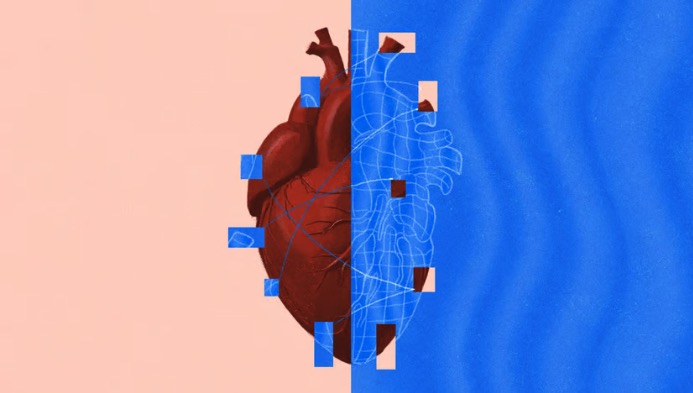
The organ most relevant to engineers, though, is the heart, a system of valves and chambers that squeeze and relax up to a
hundred times a minute to send blood around the body.
And whereas hearts all follow the same laws of physics, each does so in different ways.
Everything from diet and lifestyle to age and physique can alter how cardiac tissue contracts in response to electrical
signals, as well as how smoothly blood flows through the heart’s chambers.
Understanding the impact of such changes on bodily health is key to helping patients recover from heart disease.
A digital twin could help.
At Queen Mary University of London, Caroline Roney is using virtual models to find better ways to treat atrial fibrillation.
Driven by haphazard electrical signals in the upper heart, atrial fibrillation is the most common form of cardiac
arrhythmia, affecting about 1.4m people in Britain.
If not treated, it can lead to stroke or heart failure.
At present, that treatment often involves ablation: heating or freezing small diseased regions of the heart to form tiny scars
that block errant electrical signals.
Patients respond to ablation in widely different ways, in large part, says Dr Roney, because of differences in cardiac tissue.
She is, therefore, working to customise treatment, using digital twins to recreate the particulars of individual hearts and
predict how they will react to ablation.
The first step is to make such a twin.
Thanks to advances in scanning technology, the structure and composition of the heart can be replicated to within less
than a millimetre.
Crucially, such a computer simulation can also be programmed to replicate patterns of electrical conductivity in different
regions of the heart, using information obtained from electrocardiograms (ecgs).
By recreating these patterns in the modelled heart, the digital twin can be used to simulate ablation, as well as the probable
patient response, before any surgery occurs.
What’s more, such digital twins could theoretically predict changes in the heart structure brought on by age, without the
need for further scans.
And, in principle, twins of different organs can be developed separately and then combined, with the outputs from one
used as inputs to the others.
Dr Roney is part of a European consortium called the Ecosystem for Digital Twins in Healthcare, which works on ways to
integrate twins of different organs, with the ultimate goal of creating a virtual human body.
This would allow for more reliable modeling of everything from the effects of medication to the consequences of surgery.
The project is due to publish a plan in September that sets out how exactly this could be achieved.
Some researchers dream of doing something similar with Earth, by combining digital twins of specific planetary processes.
This would have real-world benefits.
Thomas Coulthard, a physical geographer at the University of Hull, is building a digital twin of the local area to help
authorities respond to heavy rainfall and storms.
By modelling what happens to surface water when sluice gates and barriers are opened and closed, the twin lets everyone
from water companies to individual landowners test the possible consequences of action and inaction.
Threading millions of such small-scale systems into a global patchwork will take time.
Others are therefore jumping directly to the largest scales.
Thomas Huang, a data scientist at nasa’s Jet Propulsion Laboratory, is building a digital twin of the planet’s climate.
His goal is to use real-time data to improve predictions of how global warming will affect the weather.
His biggest challenge, though, is not finding the data: this exists, often in very high quality, covering everything from
temperature records to predictions of how rainfall will change over time.
The real difficulty is connecting everything.
Even adding something as apparently straightforward as surface temperature measurements relies on integrating
information in a range of formats originating from sensors on satellites, ground stations and floats bobbing in the deep
ocean.
It is perhaps when scientists are in full control of the data that digital twins can be most useful.
Nowhere is this control more absolute than during the design of large-scale experiments. cern, for example, runs virtual
simulations of how the Large Hadron Collider, a massive particle-smasher, collects data, and uses them to test how small
alterations can increase its efficiency.
And a digital twin of the orbiting James Webb Space Telescope, perhaps the most complex instrument of its kind ever built,
helps scientists on the ground plan changes and maintenance.
In all these cases, the twin not only produces real-time predictions, but relies on a stream of real-world data to keep its
predictions relevant.
Such two-way modelling helps science itself proceed much faster, says David Wagg, an expert on digital twins at the Alan
Turing Institute in London.
With a plugged-in virtual twin, forecasts can be tested—and updated—all the time.
With so much to recommend them, digital twins are likely to become ever more integral to how science is done. ■

… w
...





warm? … is anyone warm? … ???? Oh well ….



 smallstepsgiantstrides.net
You must be logged in to post a comment.